
自動化細胞培養系統
單株抗體療法:其在製藥市場的重要性無庸置疑。隨著新的治療性抗體需求持續增加,更有效率地開發穩定的細胞株變得越來越重要。為癌症和自體免疫疾病等病患提供新療法要分秒必爭,因此加快產品上市速度至關重要。而這需要更快、更有效的clone篩選。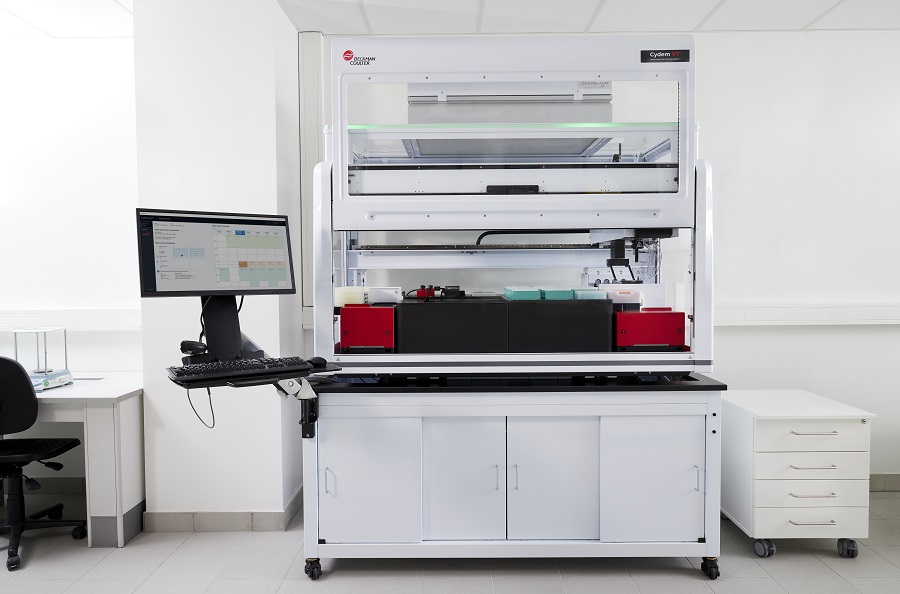
FAQ on Automated Cell Culture and Clone Screening Systems
What is clone selection in cell line development?
Clone selection is the process of identifying cell clones with desirable characteristics such as productivity, growth performance, stability, or product quality. It is a critical step in cell line development because the selected clone can directly influence downstream manufacturing performance.
What workflows can automated cell culture and clone screening systems support?
Automated cell culture and clone screening systems can support microbial and mammalian cell culture workflows, cell line development, clone screening, and selection, monoclonal antibody development, media optimization, and high-throughput screening programs.
What is an automated cell culture and clone screening system?
An automated cell culture and clone screening system is an integrated laboratory platform that helps manage cell culture and clone evaluation activities through automated sampling, feeding, media exchange, process monitoring, imaging, and data collection. These systems support more standardized and scalable cell line development workflows.
How does automation support cell line development?
Automation supports cell line development by enabling researchers to evaluate larger numbers of pools and clones while reducing manual intervention. Automated workflows help accelerate candidate identification, improve workflow consistency, and support data-driven decision-making throughout development programs.
What are the benefits of automated cell culture?
Automated cell culture can help reduce hands-on time, improve reproducibility, minimize variability between operators, and increase laboratory throughput. These benefits can be especially valuable for organizations managing large-scale screening and development programs.
