

Optima AUC 分析型超高速離心機
貝克曼庫爾特推出了第一個AUC樣品表徵儀器,以幫助科學界推動新發現。新的Optima AUC分析型超速離心機系統依舊將這一傳統延續到21世紀。
這一最新工具擁有最強大的技術,可用於提供確定基礎蛋白質研究中蛋白質分子量的數據,以及用於學術和生物製藥研究的數據的量化。
想進一步瞭解分析型超速離心法嗎?歡迎更加深入地瞭解我們的 AUC 系列相關資源部分。
*本產品僅供工業與科研使用,不用於臨床診斷

產品特性
數據品質更佳
在自然無基質條件下分析各種粒子,包括:
提供的數據可以回答比任何其他類似技術更多的關鍵問題,包括:
- 形狀
- 分子量
- 直徑
- 化學計量比
- 異質性
- 自體聚集
- 聚集狀態
- 純度
- 配方
- 直覺式的觸碰螢幕顯示實驗設計的直觀進展
- 遠程監控功能使您可以從幾乎任何位置設置,監控和提取數據
- 與 ProteomeLab XL 樣品池及轉頭兼容
- 切換光學檢測器加速工作流程準備
Explore Optima AUC Models
Accessories
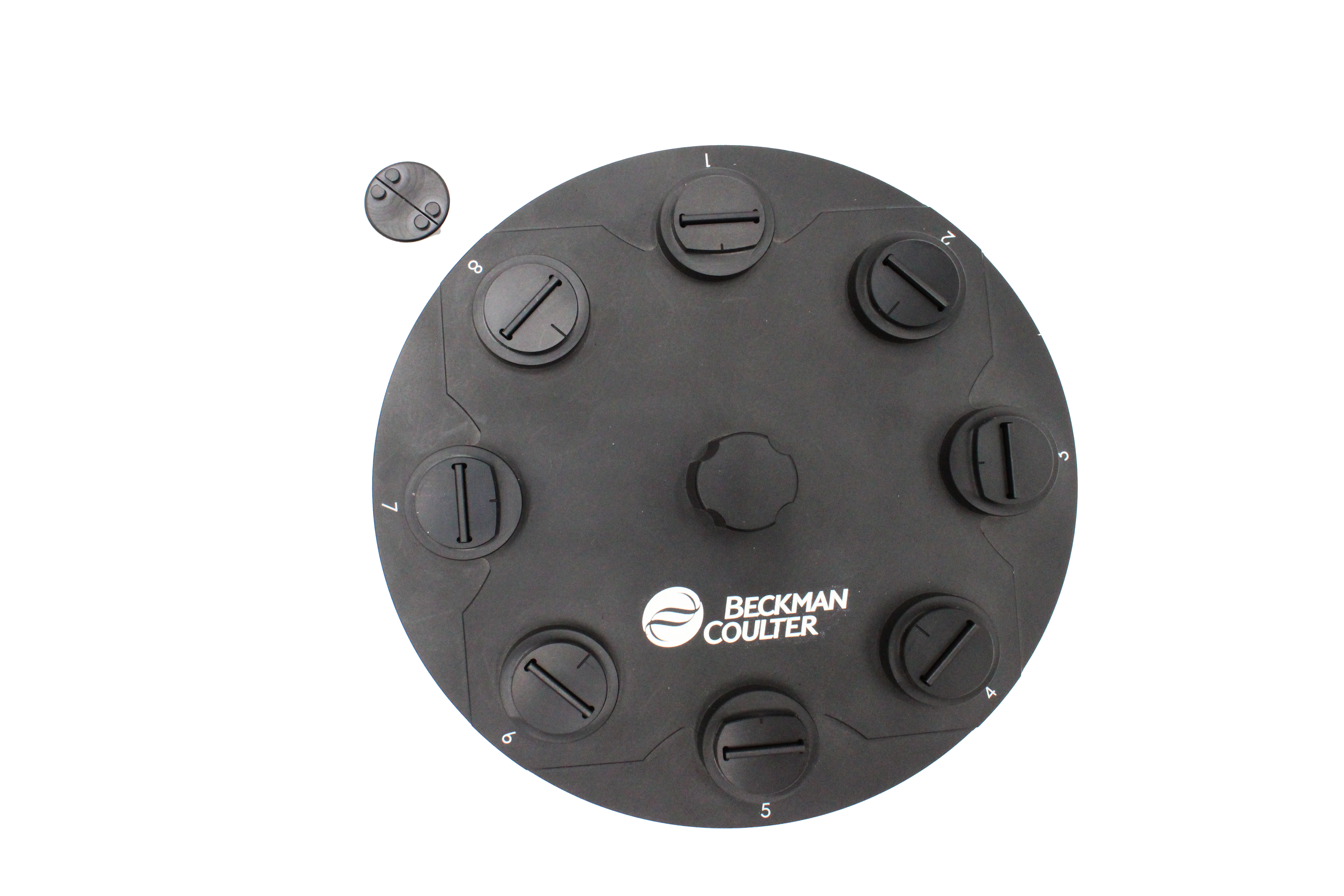
AUC Cell Alignment Stand
Easily ensure your AUC cells are aligned without relying on the rotor scribe marks or visual alignment. For use with both AN-50 and AN-60 rotor. It can align up to 8 AUC cells simultaneously, with the option to align the counterbalance too. Not for sale in every country. Contact your salesperson for more information
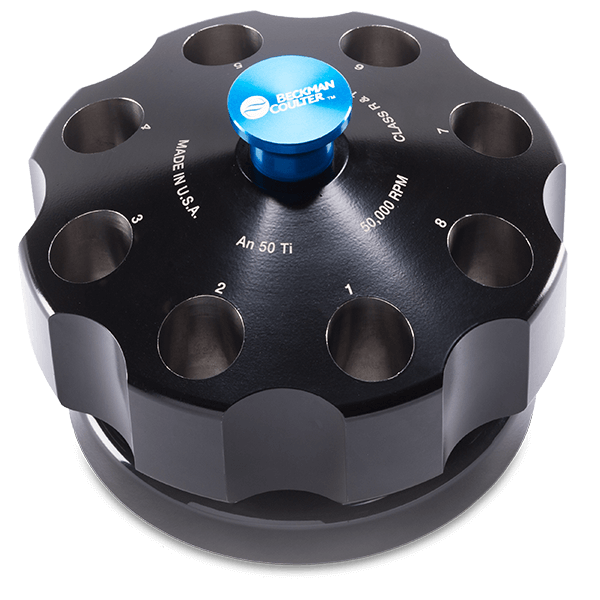
An-50 Ti Analytical 8-Place Titanium Rotor
The An-50 Ti 8-Place Titanium Rotor is a specialty rotor for use with Beckman Coulter Analytical Ultracentrifuges.
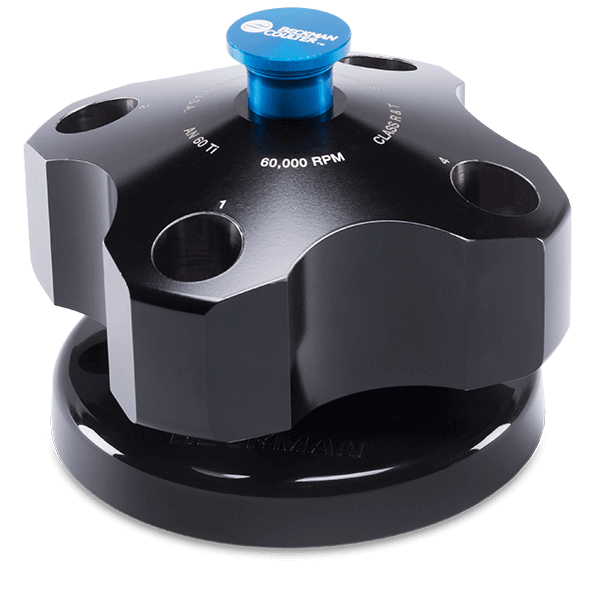
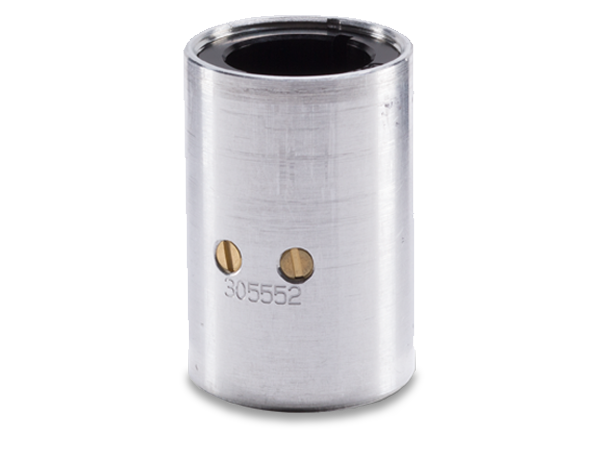



Technical Documents
FAQ on the Optima AUC Analytical Ultracentrifuge
How do you analyze AUC data?
AUC data can be exported and analyzed using several different software packages including SEDFIT, UltraScan, SedAnal, SedPHAT, and more*.
Beckman Coulter Life Sciences released the Optima AUC cGMP Suite software, which helps with experimental setup, live data monitoring, analysis and report generation, while supporting 21 CFR Part 11 compliance.
*Third-party analysis software has not been validated by Beckman for use with the Analytical Ultracentrifuge. Beckman does not endorse any third-party analyses software. Beckman warranty and/or performance guarantee that may be applicable or are provided by Beckman for Analytical Ultracentrifuge do not apply to any third-party software.How is fringe displacement calculated?
The system performs a single-point discrete Fourier transform (DFT) at the frequency represented by the fringe vertical frequency. This transform is calculated on each vertical column of data, across the entire row. The phase of each calculation is used to calculate fringe displacement (1 fringe displacement = 360 degrees of phase shift).
How is the sedimentation coefficient determined?
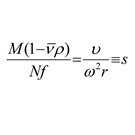
If you know the particle velocity (υ), the angular velocity (ω), and the radius from the axis of rotation (r), you can calculate the sedimentation coefficient (s).
Per the left side of the equation, this value is proportional to molecular weight (M) multiplied by buoyancy factor (1-v p and inversely proportional to the frictional coefficient. Large values of S (faster sedimentation rate) correspond to larger molecular weight.
What do fringe patterns from interference testing reveal?
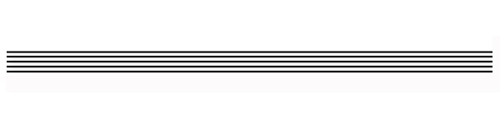
If the two beams pass through identical substances, the resulting fringe pattern is relatively constant across the length of the image, as shown here:
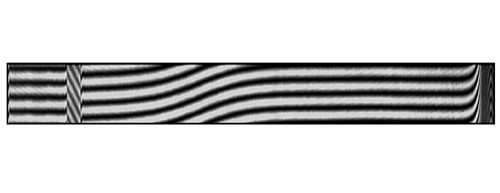
If the beams pass through different substances, and the concentration of one of them varies across the radial length, the fringe pattern shows interference as seen here:
How is sample detection done in an analytical ultracentrifuge (AUC)?
Two common types of optical analysis include UV/visible light absorbance (detecting wavelengths between 190 and 800 nm) and Rayleigh interference. Both rely on light passing through the sample, with a detector capturing the light after it passes through the sample. Data is collected in this manner over the course of the centrifugation, so that the sedimentation pattern of the sample can be tracked. Various calculations are made from the data to determine sample characteristics.
Do Optima AUC rotors differ from those for a preparative centrifuge?
Yes. AUC rotors are designed to address additional considerations, such as:
-
Light passage
AUC rotors are designed so light can pass through a sample, generally from top to bottom. -
Overspeed disk
To prevent damage, the overspeed disk allows the system to determine the maximum rated speed of the rotor and prevent it from spinning faster than that maximum. -
Timing magnet
This is embedded in the overspeed disk. A pickup device in the system senses when the magnet passes over and generates a pulse that represents a known time. The AUC uses this pulse to synchronize the rotor speed with the flash of the light source.
How is an analytical ultracentrifuge (AUC) counterbalance configured?
An AUC counterbalance not only offsets sample cell weight, but also provides a way to calibrate the optics.
Each counterbalance, which is always anodized red, features four reference holes with removable mask windows.
The inner edges of the reference holes should match the outer edges of the centerpiece cell. The counterbalance weight can be adjusted by screwing weights into the center of the counterbalance cell. Using the provided screw weights, the counterbalance must weigh within 0.5 grams of the sample directly opposing it in the rotor.
What is interference and how is it detected using analytical ultracentrifugation (AUC)?
There are two types of interference:
-
Constructive Interference
When crests/troughs of two waves meet, creating a crest/trough equal to the sum of their amplitudes. -
Destructive Interference
When the crest of one wave meets the trough of another, cancelling each other out. -
Constructive and Destructive Pattern from 2 Slits
If a light source is passed through two parallel slits, it creates constructive and destructive interference in a repeating "fringe" pattern that can be analyzed via AUC. The interference optical system, in the Optima AUC Analytical Ultracentrifuge, performs scans in which fringe displacement is measured as a function of radial distance.
